|
*** *** *** *** *** *** *** *** ***
THROUGH CYPRUS *** *** *** *** *** *** *** *** *** [Kyrenia] [Famagusta] [Nicosia] [Lefke] [Limassol] [Paphos] [Larnaca]
LIMASSOL / LIMASOL
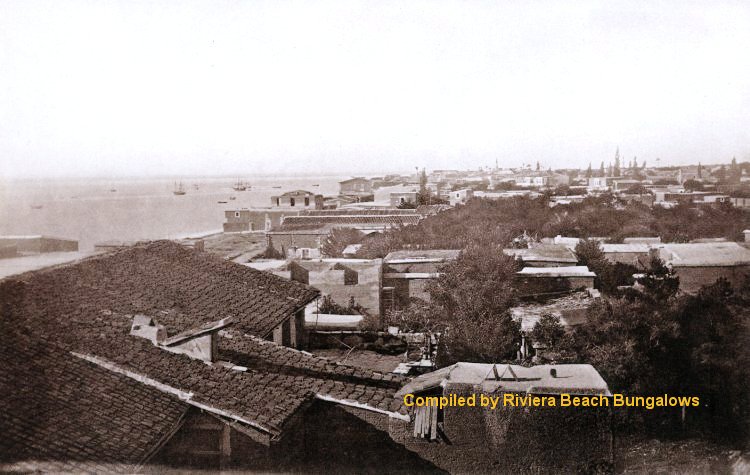
Limassol (Limasol), the capital of the province
of the same name, stands on the shore midway between Neo Paphos
and Larnaca, and has a population of some six thousand souls, of
whom one-third *** *** *** *** *** *** *** *** ***
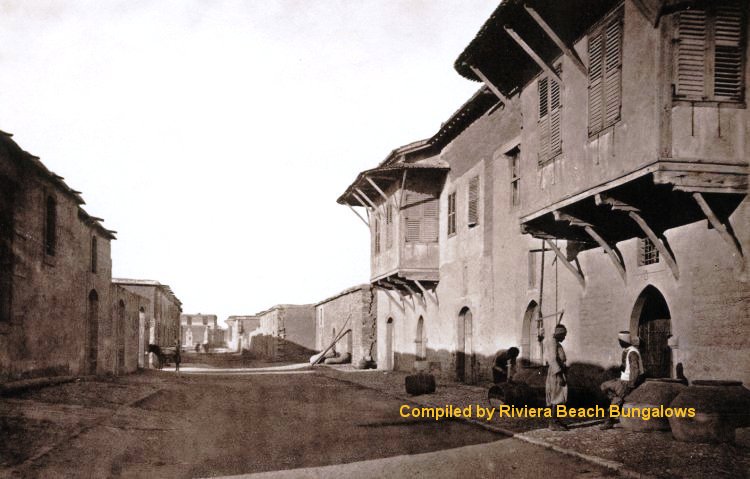
THE MAIN STREET, LIMASSOL The accompanying view is taken from
the front of the Franciscan monastery, looking westward along the
main street which runs parallel to the coast. The courts to the rear
of the houses on the left face the sea; indeed, their outer walls
rise out of the sand and shingle on the slope of the shore. Here and
there, between the houses, are narrow alleys, breathing-spaces which
divide the blocks of buildings and dip downwards to the open beach.
These alleys have lately been cleansed, but, not long ago, the
breeze which visited them must have been tainted with all the odours
of decay peculiar to Eastern towns, and not unfamiliar even now to
the quasi-British subjects of Cyprus. *** *** *** *** *** *** *** *** ***
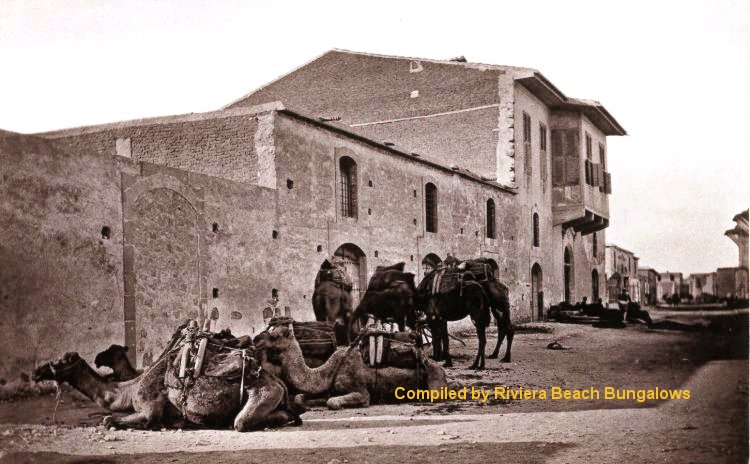
In this spacious thoroughfare we find evidence of the prosperity of the town, and at the same time discover indications of the Insecurity which prevailed under Turkish rule, in the strongly-built and barred storehouses that line both sides of the street. Many of the walls, with their iron-stanchioned windows, look as if they belonged to the outbuildings of a prison, and are probably the remains of the architectural reformation that followed the advent of the Moslems. Be that as it may, these massive stone structures afford security and coolness to stores of wine within, as well as shelter to the caravans, and troops of traders that throng round them outside. The camel, as shown in the illustration, is one of the chief beasts of burden in the island, although its use is restricted to the lower plains and seaboard. It is seen in Cyprus at its best, as the climate and pasturage are well-suited to its wants, and its powers of travelling for days without food or water are never put severely to the test. Its pliant foot is admirably adapted both to the rough paths which cross the lower hills, and to the soft, sandy tracks along the shore. Camels are Tong-suffering creatures; but if they have a notion that their owners are overburdening them they will burst forth into loud and hideous lamentations, and when the last bale is being poised on their backs, they seem almost to have acquired the faculty of speech. Their masters, if they are wise, reason calmly with them, as they make their burdens secure, and then coax them with soothing words till they rise and take the road. The house on the left of the picture is the residence of the British Commissioner. [Kyrenia] [Famagusta] [Nicosia] [Lefke] [Limassol] [Paphos] [Larnaca]
|