|
*** *** *** *** *** *** *** *** ***
THROUGH CYPRUS *** *** *** *** *** *** *** *** *** [Kyrenia] [Famagusta] [Nicosia] [Lefke] [Limassol] [Paphos] [Larnaca]
KERYNIA / KYRENIA / GIRNE
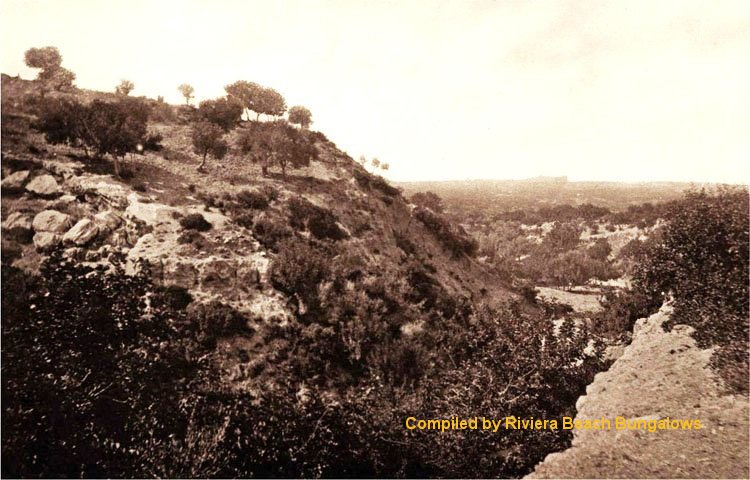
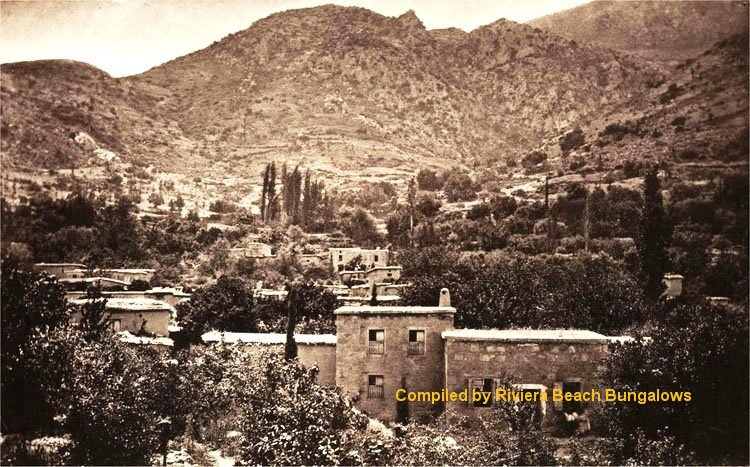
KERYNIA PLAIN, FROM THE HILLS As the traveller approaches the hills from the plain of Mesorea, he sees evidences of extensive and successful tillage all around him, and herds of sheep and goats, tended by their shepherds, pasturing on the hill-sides or fallow ground. Even in summer or autumn, as one makes the ascent of the hills, the arid appearance of the plain is exchanged for the vivid green of shrubs and pines, interspersed with flowers of brilliant hues. Here and there are olive plantations, the trees laden with fruit, and their pale leaves glistening in the sunshine like frosted silver. Some of the hill-slopes are planted out with vines, while the rich soil of the valleys below is studded with orchards, or taken up with the culture of the mulberry and cotton. Pleasant glimpses of the rich plain of Kerynia may be obtained, now and again, between the hills; or from the top of some eminence we may descry it spreading out a verdant expanse to the shores of the Mediterranean. An old castle, looming in the distance, marks the site of the town. The way across the hills from Mesorea is simply a mule-track, which climbs with a gentle gradient the glens on the southern face of the mountain range, but falls in steep declivities towards the northern plain of Kerynia (Kyrenia / Girne). *** *** *** *** *** *** *** *** ***
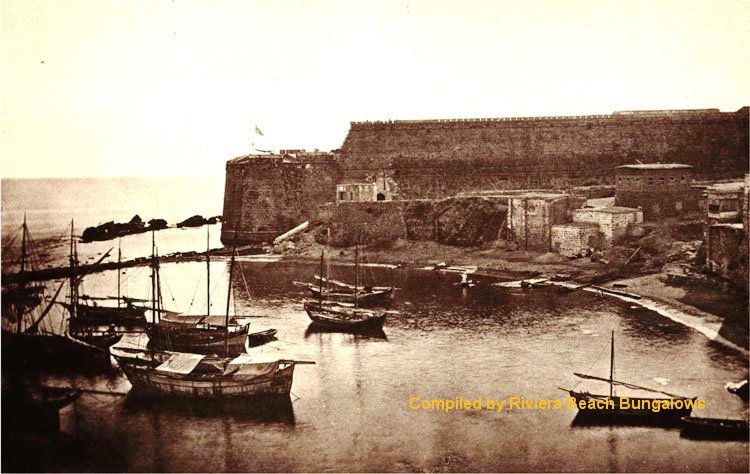
KERYNIA HARBOUR Kerynia, at one time the capital of a small kingdom, but at the present day little beyond a village, boasts the only harbour on the north of the island, and carries on an unimportant trade with the coast of Asia Minor. The depth of the port nowhere exceeds two fathoms, while its limited area only provides anchorage for the small class of vessels seen in the photograph. A reef of rocks outside the haven indicates the position of an ancient sea-wall. The importance attached to the town in olden times is seen in the massive fortifications that guard the entrance to the port. It is supposed to have been founded originally by Dorian colonists under Praxander and Cepheus, and, even at a late period in its history, it was jealously guarded and kept open for the reception of food supplies from the mainland to support the garrisons in the mountain forts of St. Hilarion, Baffavento (Bufavento), and Cantara Castles. The trade at this pigmy port is so insignificant that it has never been referred to in the consular commercial reports; a circumstance to be accounted for by the greater facilities offered for the anchorage of large vessels, by the roadsteads of Larnaca, Limassol, and Paphos, to which places, indeed, part of the produce of the plains of Kerynia finds its way across the island for shipment. There is great reason to doubt whether Kerynia will ever regain its ancient commercial fame. The harbour might be deepened and enlarged, but only at a cost which would need many years of unprecedented prosperity for its reimbursement The sale and commodious southern roadsteads are certain to supply the wants of the trade of the island, until such time as Larnaca or Limassol become the chief ports of the Levant. *** *** *** *** *** *** *** *** ***
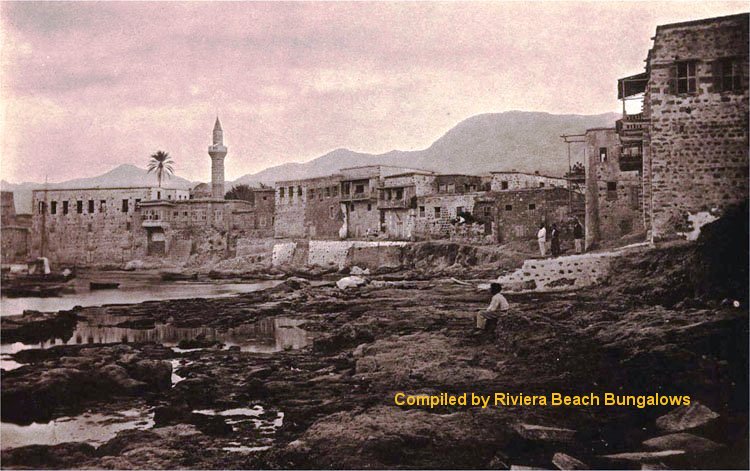
KERYNIA, FACING THE SEA The view of Kerynia (Kyrenia / Girne) is one of
the most imposing that can be obtained from the shore, and yet the
place looks no better than many of the small fishing stations common
in Southern Europe. It may here be noted that the pursuits of the
people are so purely agricultural that few fishing villages are to
be found on the coast of Cyprus. This picture was taken at low
water, and it seems evident from the construction of the houses that
a great rise in the tide occurs at certain seasons of the year. *** *** *** *** *** *** *** *** ***
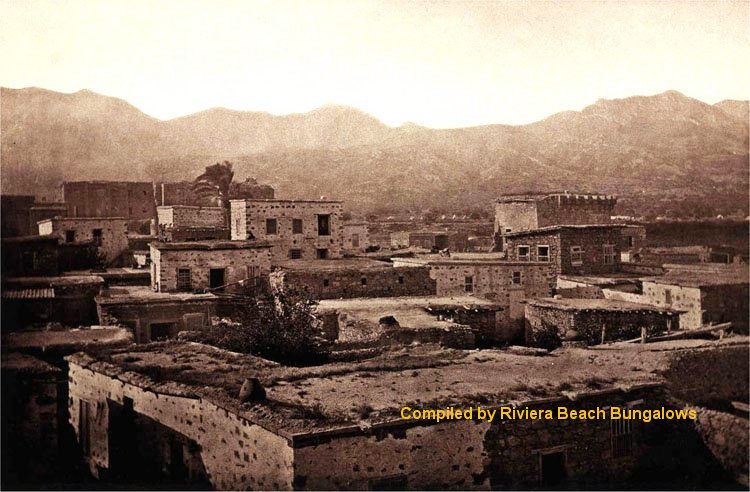
KERYNIA, SHOWING THE CAMP OF 42nd HIGHLANDERS The houses seem to be piled one above
another in this Kerynian group, and the roofs look like platforms
common to the whole town. Indeed, it sometimes happens that the
roofs join one to the other, so as to form an agreeable promenade
where friends may stroll at eventide and study the proceedings of
their neighbours in the courts below. The clay of these roofs may
crack and yawn under the summer heats, but it expands and closes
again with the first shower of rain, and supplies a waterproof
covering for the floors beneath. In these latitudes rain falls
suddenly, and it sometimes surprises the women at work aloft drying
clothes or airing stores of linen. The alarm spreads with the first
drop, and the thrifty housewives may then be seen poising their
precious bundies and descending their ladders with an alacrity that
speaks well for their nimbleness. *** *** *** *** *** *** *** *** ***
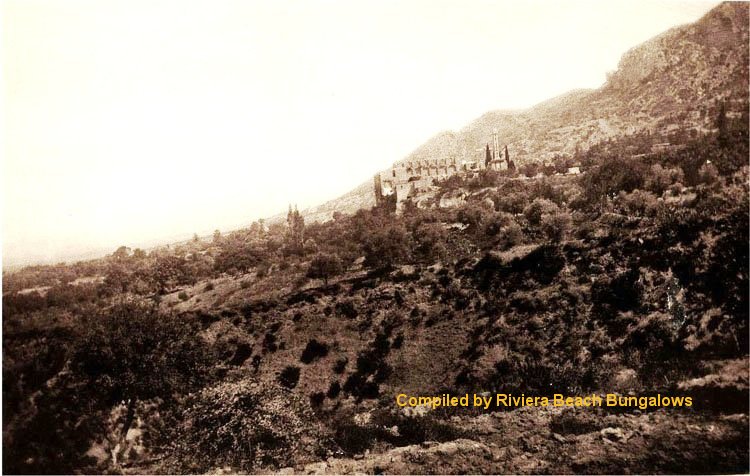
BELLE PAIX, NEAR KERYNIA The village of La Pais or Belle Paix
(Bella Pais / Balabayis / Beylerbeyi), one of the most beautiful
spots in the province of Kerynia, stands near the summit of the
northern range of mountains about three miles east of the town. The
path across the plain from the provincial capital to the highland
village, now skirts past stone conduits, and now meanders through
green lanes, where the fig, the orange, the olive, and the
carob-tree overarch their umbrageous foliage. These rustic lanes arc
invaded by prickly sprays of blackberry and dog-rose, and decked
with the blossom of the oleander. In early summer they arc filled
too with the fragrance of myrtles, hyacinths, lilies, violets, and
wall-flowers, and in their open spaces are carpeted with daffodils,
crocuses, and daisies. Even during autumn, when Mesorea is parched
and its herbage feels crisp under-foot, Belle Paix, with its gardens
and rivulets, seems almost at its best. The fact is, that most of
the trees and shrubs are evergreen, and cast their leaves only when
a blighting wind sweeps over the land. *** *** *** *** *** *** *** *** ***
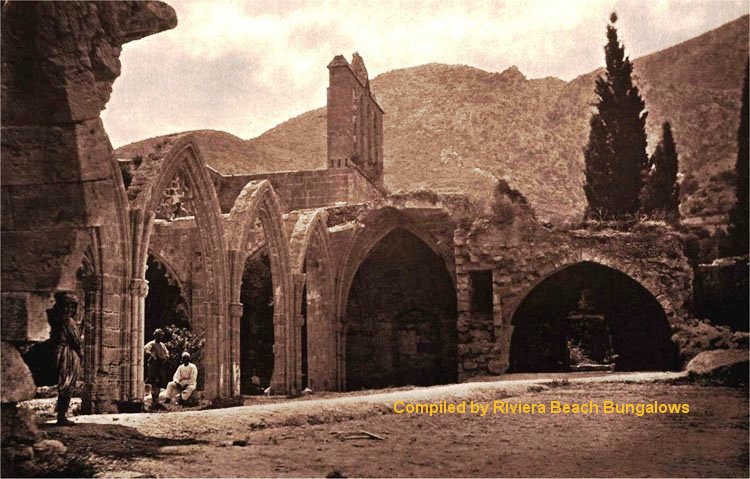
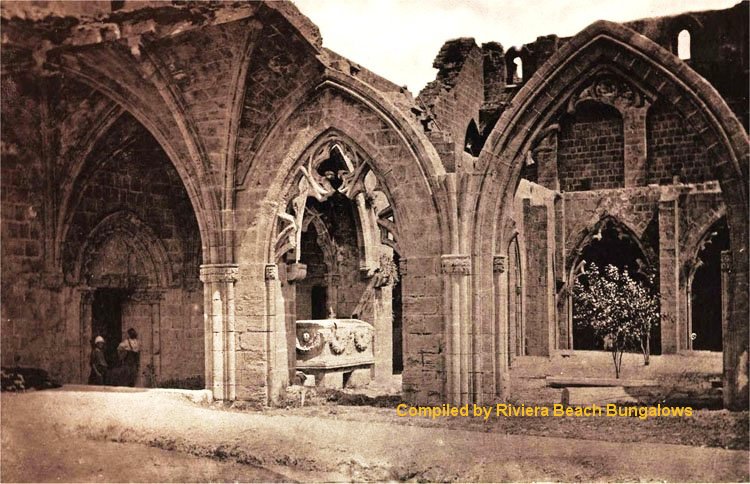
ANCIENT ABBEY, BELLE PAIX MONASTERY The Abbey of Bella Paix (Bella Pais / Balabayis / Beylerbeyi), founded by Hugh III., belonged to the Latin Church. The massive pile, though standing despoiled of much of its beauty, seems to have defied the ruthless efforts of the invader to raze it to the ground. Of the courtyard little now remains beyond a few mutilated arches and bare wails; but two lofty apartments within, one above the other, are still in good preservation. Of these, the upper-room or hail (which probably formed the refectory of the monks) measures too feet by 30 feet, and is about 40 feet high. *** *** *** *** *** *** *** *** ***
ENTRANCE TO THE GREAT HALL The illustration shows part of the arches of the courtyard, and the entrance to the Great Hall. In front of the portal, on the left, is a marble sarcophagus of the Roman period, while over the doorway, cut upon the lintel, are three shields: on one of these is depicted the Jerusalem Cross, on another the royal arms of the Lusignans, while the third carries a lion rampant. At the time of our visit the ball was being repaired by a party of Royal Engineers, and adapted for hospital accommodation; but the idea was afterwards abandoned, as the site was considered unfavourable. Adjoining the courtyard there is an ancient chapel, which has been patched up with clay-bricks and whitewash, and thus fitted to shelter worshippers of the Greek Church. *** *** *** *** *** *** *** *** ***
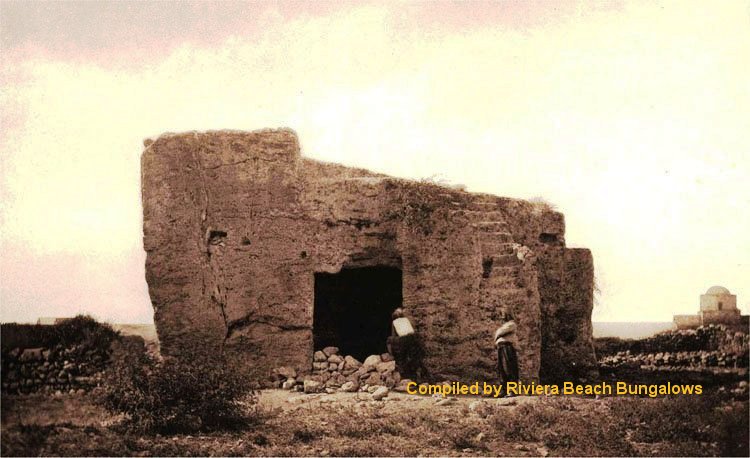
ROCK-CUT TEMPLE, RUINS OF LAPHETUS As we follow the road, or more properly the mule-track, westward from Kerynia, we come upon the ruins of Lapethus (Lapithos / Laphetos / Lapta), once the capital of an ancient kingdom of the same name. Here, close to the shore, stands the Greek monastery of Acheropeti and two ruins of Latin churches. On the floor of the monastery chapel there are a number of sculptured tomb-stones, notably one, bearing the effigy of a Knight Templar, his head pillowed, and his hands raised in the attitude of prayer. The marble slab on which this effigy has been carved is ornamented with a richly sculptured border, and is in wonderful preservation. Shafts of pillars, and many other relics of bygone times, bestrew the courtyard outside; while near at hand, though half-concealed beneath a stratum of earth, there is a fine Mosaic pavement running up to the doorway of some building now in ruins. A few paces further to the cast stands the rock-cut tomb or temple of our illustration. This is the “rock-room” noticed by Pocock on page 222 of his second volume. In shape, the interior is an oblong rectangle; but there are two recesses, one to the right as we enter, and the other cut in the end wall. There seems also to have once been some sort of screen or partition not far from the entrance, but most of this has long since been demolished. Pocock mentions a spring of clear water issuing from the rock below the monastery, and falling into a marble sarcophagus. The spring is still to be seen, sheltered within a rocky grotto which faces seawards, draped with ferns and decorated with moss and stone-crop of fairy hues. [Kyrenia] [Famagusta] [Nicosia] [Lefke] [Limassol] [Paphos] [Larnaca]
North Cyprus Hotels | Flights to Northern Cyprus | Hire Car | Itinerary Riviera Beach Bungalows, studios & superior hotel rooms |