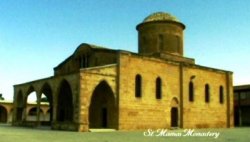
St. Mamas Monastery and Icon Museum
|
|
Tradition
has it that in the 12th century, Mamas, a poor Cypriot
hermit, refused to pay his taxes, and so troops were sent to
bring him to the capital for punishment. On the way, the
party came across a lion about to kill a lamb but Mamas
saved the lamb, taking it in his arms, and then rode the
wild lion into the capital city. Legend has it that the
Byzantine authorities were so impressed with what they saw,
they released the hermit from his obligations and since then
St. Mamas has been regarded as the protector of tax
avoiders.
Scattered across the island are 14 churches dedicated to St.
Mamas. This particular Monastery of St. Mamas was built in
the 18th century and it is said that St. Mamas is buried
within its grounds. The upper part of the iconostasis,
carved of wood and painted in blue and gold, is an exquisite
example of late 16th century wood carving. Its lower part is
carved of marble and features figs, grapes and acorns, and
Venetian shields which once bore painted coats of arms. Its
sarcophagus contains two holes from which a balm against eye
and ear diseases and other illnesses oozes which also calmed
stormy seas, bringing to mind the "sweating stones" in other
Byzantine churches.
The inside of the church is also covered in hundreds of
beautiful and well-preserved icons from the Orthodox faith,
with some still in the restoration process. |
|
|