Girne Harbour, Castle and Museum
|
|
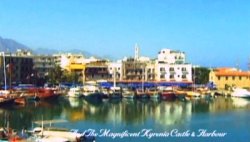
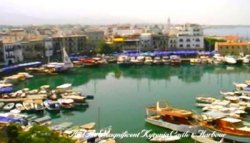
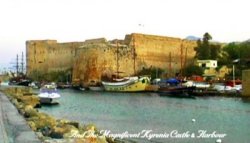
The elegant
crescent-shaped Venetian harbour in Girne is the place to
relax and enjoy the bustling yet uncannily pretty harbour
town – it’s also delightfully breezy during the hot summer
months and a great place to sit, savour and simply enjoy.
Visit buzzing waterside cafes and fish restaurants for
delicious food and drink, a good dose of harbour-side
romance and beautiful views of the sea where fishing boats
mingle leisurely with sophisticated yachts.
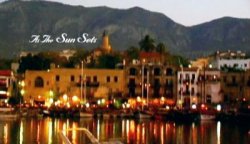
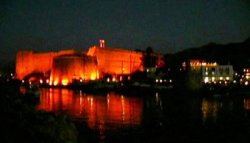
The castle of Girne, one of the most impressive and powered
castles to have survived since the middle ages until today,
was supposed to be built to protect the city from pirates in
the 7th century. The remnants left from the Roman age show
that the history of Girne castle harks back to older times.
Written findings mention the Girne castle, and that the King
Richard III of England had captured the island during the
Crusades in 1911. It is known that the castle of Girne had
been subjected to changes during the sovereignty term of
French Luzinyen lasting for 300 years. The castle was
heavily demolished by the attack of Genovese' in 1373. The
Venetians rebuilt the castle in order to gain protection
from the Ottoman fires. New city walls and round towers were
added during this term. When the castle was finished, the
church of Saint George that was used by Knights Templar and
was supposedly built in 1100 was within the city walls.
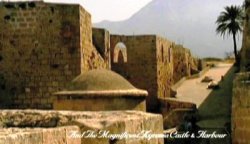

The castle is reached by a marrow bridge built on a deep
ditch, which was used as an inner port filled with water
until the years of 1400. The figures of three lions standing
on their back paws on the vault of the inner door were made
by Luziniens. The tomb is seen when entered through the door
belonging to Algerian, Sadik Pasa, Ottoman Admiral who died
during the capture of Cyprus in 1570. Today the Venetian
Tower (in the southwest), Lusinien Tower (in the northwest),
and the prisons of Lusinian period were restored as
animations. Also, Samic, compositions belonging to Vrysi
Neolithic village taking place 10 km far in the east of
Girne, findings, animations of tombs found in Kirni village
during Early and Middle Bronze Age, and Sunk Ships Museum
are all open as exhibitions.
|
|
The
sunk ship exhibited in the castle of Girne was built
in 389 BC and was 80 years old. About 400 pieces
Amphora, 29 basalt millstones, about 9000 pieces of
almond were found in this sunk ship that was thought
to be a cargo ship during Hellenistic ages after the
death of Alexander. About 300 pieces of lead shows
the ship was used for fishing. This sunk ship is
about 1.5 km near Girne, at depth of 18 m and found
by sponge fisherman in 1965. It was taken out of
water by the experts of Pennsylvania University.
It is 15 m in length, made of Aleppo pine. The
wooden surface of the ship is coated with a strong
lacquer, to protect against Mediterranean
wood-boring maggot. The kitchen utensils, wooden
spoons, olive bottle, glasses, saltcellars show the
ship's crew was only four persons. |
|
|
|