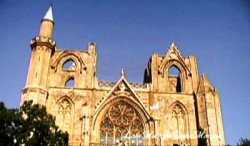
Standing formidably in the
centre of the old city’s walls, this building, built by the
Lusignans between 1298 and 1312, is one of the most
beautiful Gothic structures in the Mediterranean. The
imposing edifice, formerly known as the St. Nicholas
Cathedral, boasts two tall towers, one topped with a
minaret, which can still be seen from miles away despite
having suffered some damage from earlier battles and
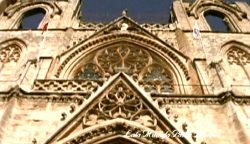
earthquakes. One of the original stained-glass windows also
remains: the six-part rose window high above the
western-facing façade. This main façade, which gazes across
the old city’s main square, may look familiar, as the design
was originally based upon the Gothic Rheims Cathedral in
France. The Lusignan kings would visit this church to be
coroneted King of Jerusalem, once they had been crowned in
the capital city.

The cathedral was
turned into a mosque in 1571 by the building’s namesake Lala
Mustafa Paşa, the man who conquered the city that same year
– it now also contains a small shrine and an Ottoman tomb
dating from 1700. It is a vast airy space, enhanced by its
white-washed walls, that bestows a great sense of calm and
lightness to its visitors. It is also said that the old East
African fig tree at the entrance of the mosque was planted
in 1250 and could therefore be the oldest living tree in
Cyprus! The 16th century Venetian gallery, also in the
courtyard, is today used as a reservoir for ablutions.
When visiting the mosque, please ensure to
respect the modest dress code which includes removing shoes,
covering legs (men and women) and a headscarf for women –
the curator can also supply the correct attire if you forget
to bring your own.