St. Barnabas, born of a Jewish family in Salamis, returns to
Cyprus after his studies in Jerusalem and in 45 A.D. starts
to work with St. Paul as a missionary for Christianity.
Because of his activities he is killed by his compatriots
and his corpse is hidden in a marsh, later to be deposited
into the sea. The followers of St. Barnabas watch the
events; they take the corpse to an underground cave to the
West of Salamis and bury it there after putting a copy of
the Bible made by St. Mathews on his chest. The corpse
remains hidden for many years as its whereabouts is known to
none. 432 years later, Bishop Anthemios says he has seen the
grave in his dream, and has the place dug. When the grave is
opened, St. Barnabas can be identified because of the St.
Mathews Bible. After this incident, the bishop goes to
Istanbul to inform Emperor Zeno, and gains the autonomy of
the Cyprus Church. The emperor makes a donation for a
monastery to be built at the location of the grave. The
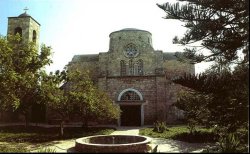
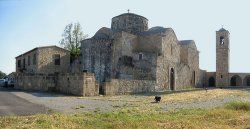
monastery constructed in 477 A.D., consists of a church, a
courtyard, and living quarters for priests.
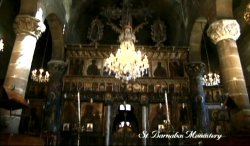
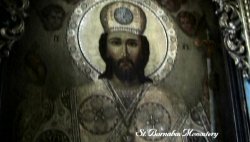
The St. Barnabas church has a rich collection
of icons mostly dating from the 18th century. The basalt
mill in the courtyard is from the Enkomi settlement and the
other columns and stones are from Salamis. The rooms where
the priests lived have been restored and turned into an
archaeological museum. It is possible to see a variety of
works of art from a wide range of historical spectrum from
the Neolithic Period to the Roman period. Bronze and marble
pieces are also being exhibited at the museum.